When people talk about working while traveling, the conversation usually turns to remote jobs. Most of my professional background is online, but Wild Ridge was a completely different kind of opportunity.

I took a temporary position on a remote 40-acre mountain property. On paper, that sounds fairly straightforward. In reality, the property had been neglected for about two years, and there was a lot that needed attention.
Security was only one part of it.
I was checking water systems, clearing brush, working on fire mitigation, monitoring roads and trails, keeping track of inventory, dealing with repairs, watching weather conditions, handling paperwork, and figuring out what needed attention next.
Some mornings I had a plan.
Then I would find a water problem, something would need repairing, weather would move in, or another issue would suddenly become more important.
That was Wild Ridge.
Why I took the job

I wasn’t looking at Wild Ridge as a career move. The pay was considerably lower than what I could earn doing the professional work I have done for years.
But money wasn’t the only thing I was looking at.
By then I had already been traveling full-time for more than two years. Constant movement has its own cost. There is fuel, campsite research, resupplying, packing up, setting back up, and continually figuring out where I am going next.
Wild Ridge gave me a reason to stay in one place for a while.
It also gave me an opportunity to learn things I wasn’t going to learn sitting behind a laptop.
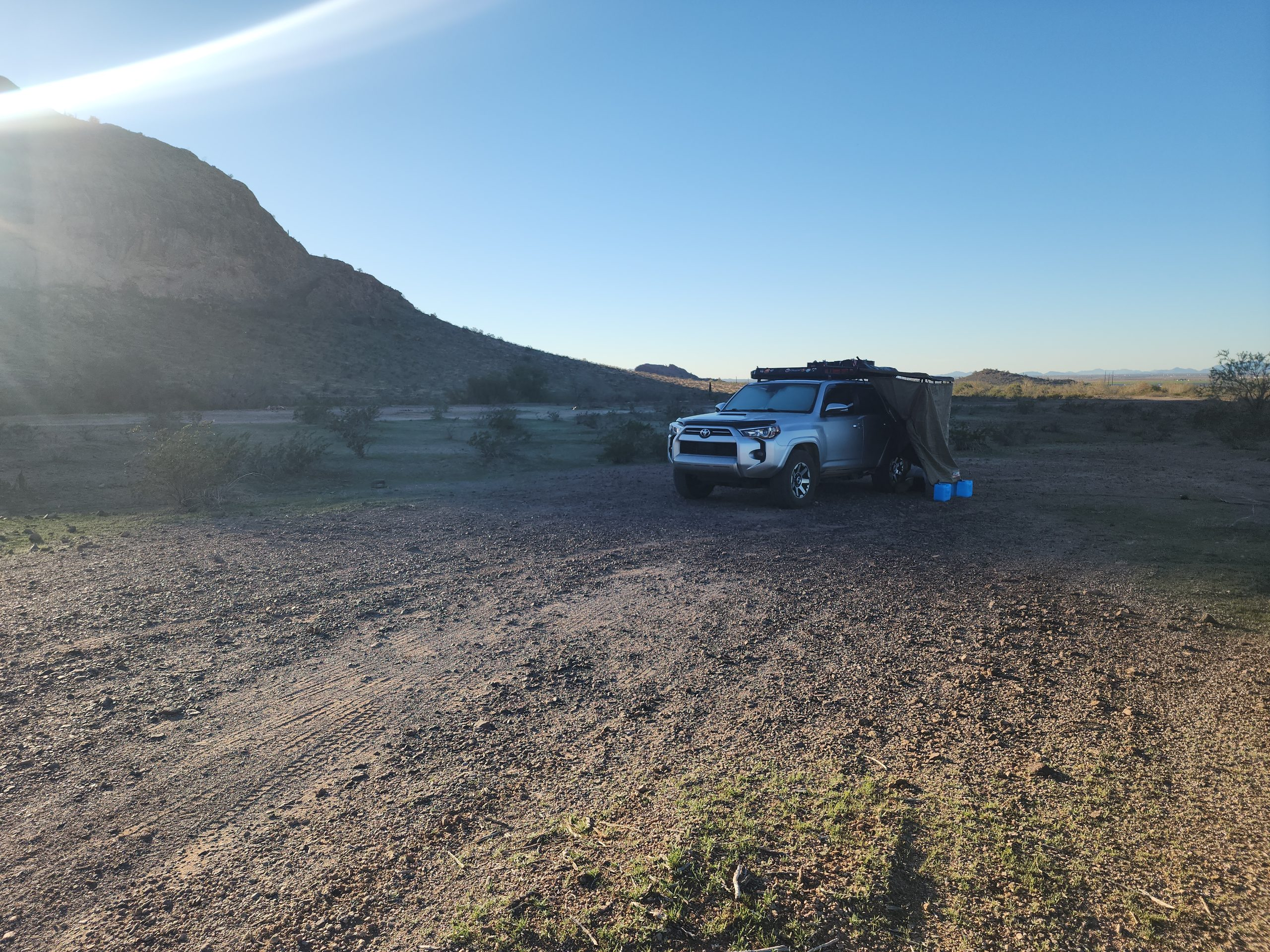
I had worked with plenty of systems inside my 4Runner. Managing water, power, food, weather, equipment, emergencies, and limited resources is part of everyday life when you live this way.
At Wild Ridge, those same kinds of decisions became much bigger.
Instead of managing a small vehicle, I was helping manage 40 acres.
There was nothing glamorous about it

Remote property caretaking can sound pretty appealing from the outside. Live on a mountain. Look after some land. Enjoy the scenery.
There was definitely scenery, but there was also a lot of work.
The property had been neglected, so I couldn’t treat every task as equally important. Fire mitigation, water, structural problems, security, and anything that could cause additional damage had to come first.
Some days were physically hard.
I was trimming brush, spraying weeds, clearing areas around the property, checking roads, moving supplies, working around equipment, and dealing with whatever else came up.
Other days were more administrative. I kept work logs, tracked inventory, documented problems, organized projects, and tried to keep the bigger picture from getting lost in all the smaller jobs.
One thing I became very conscious of was my time.
I was salaried, and there would always be more work than one person could finish. On a neglected property, you can work from sunrise to dark and still find another project.
I had to learn where to stop. That was part of the job too.
The experience had value beyond the paycheck
One of the reasons I was willing to earn less for a while was because I wanted the experience.
Wild Ridge gave me hands-on time with land stewardship, fire mitigation, remote property management, water systems, security, vegetation management, equipment, weather monitoring, and the everyday problems that show up when a property is far from town.
I also learned more about what I can handle myself and when something needs someone with a different skill set.
You don’t have to know how to do everything, but you do need to recognize a problem before it becomes a much more expensive one.
That thinking isn’t very different from car camping.
A strange sound from the vehicle, changing weather, a rough road, dwindling water, an electrical problem or a campsite that doesn’t feel right all require decisions.
Wild Ridge gave me another environment to practice making them.
Work on the road doesn’t have to look one way
This is one reason I don’t automatically tell people they need a remote job before they can travel.
Remote work is great if it fits. However, there are also campgrounds, ranches, farms, private properties, resorts, seasonal businesses, house sitting, pet sitting, temporary jobs, and opportunities to trade dependable work for something you need.
Sometimes that might be money. Other times it could be housing or a campsite is part of the arrangement.
The biggest benefit is being able to stay put for a few months while earning income and reducing some of the costs that come with constant travel.
Wild Ridge worked for that particular season of my life.
Then that season ended, and I went back to the road with a few more skills than I arrived with. That is something I have learned after years of supporting myself while traveling.
I don’t look for one perfect way to make money on the road.
I look at what I need, what skills I have, what an opportunity actually offers, and whether it makes sense for the life I am building.
Want to explore more ways to make money on the road?
Inside the 4Runner Nomad Academy, I have downloadable PDFs covering different income options.
They are designed to help you look at each option more practically, including what the work involves, what you may need to get started, and whether it fits the way you want to live and travel.
Fueled by coffee, road miles, and Roy’s questionable assistance. Enjoyed the read? Help keep it rolling. Buy Me a Coffee →