Sometimes nothing obvious happens, but a campsite still does not feel right. You may notice a vehicle passing several times, people watching your camp, signs of recent trouble or activity that does not match the setting. Perhaps the access road looks harder to navigate than expected, the surrounding area offers no visibility or another camper ignores normal boundaries.

Do not force yourself to stay because you already drove there, paid for the site or started unpacking. One serious concern is enough reason to leave and find another campsite.
Pause Before You Unpack
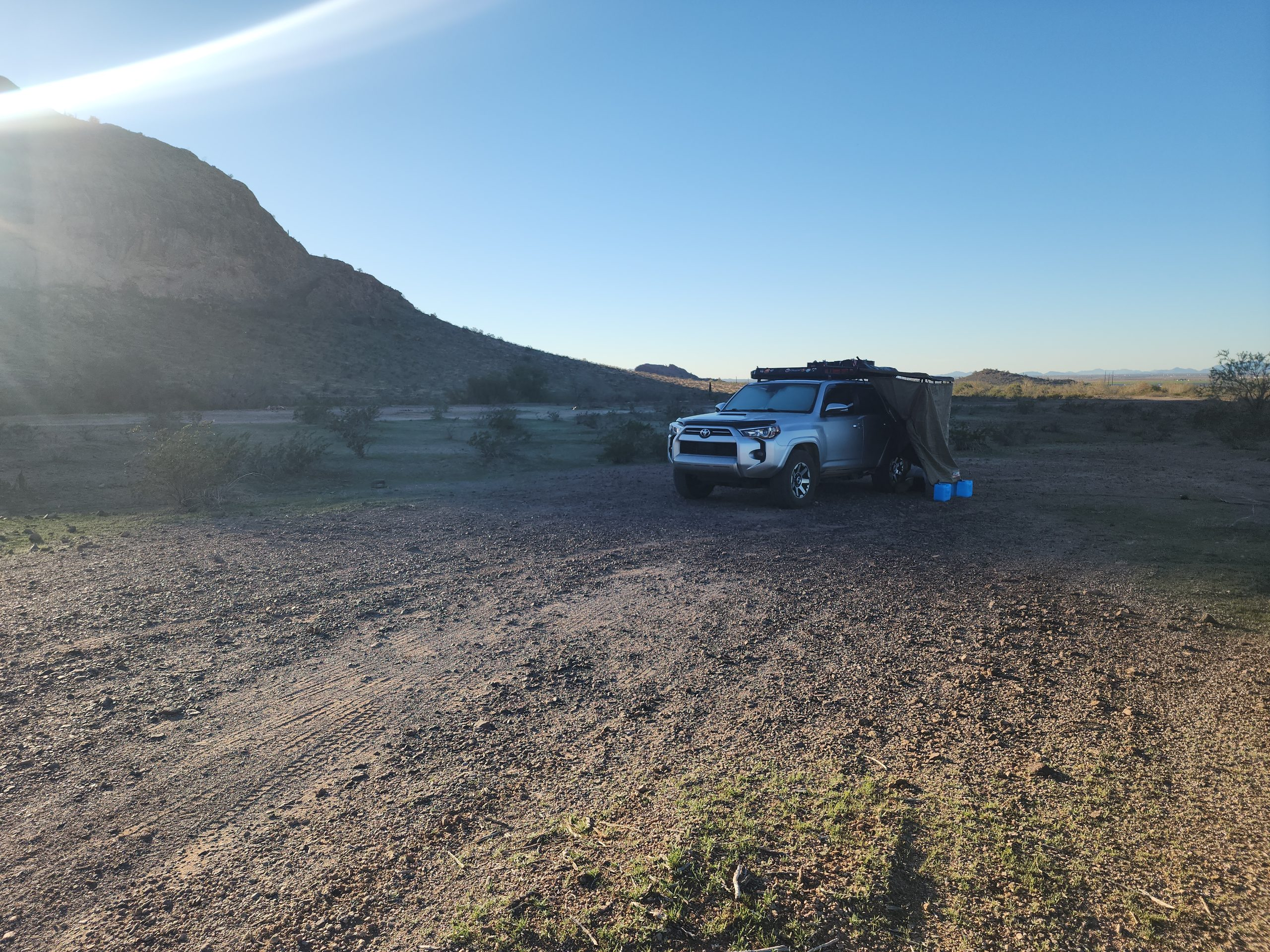
I do not immediately empty the 4Runner when I arrive at an unfamiliar campsite. First, I sit for a few minutes and watch the area. That gives me time to notice traffic patterns, nearby campers, loose dogs, road conditions and anything I could not see in photographs.
Someone who arrives while you remain packed can change your impression of the location. A quiet dispersed camping area may also turn out to sit along a surprisingly busy road.
Keep your keys, phone and shoes within reach during this initial check.
Waiting ten minutes before setting up costs very little. Breaking down an entire campsite after you identify a problem takes much more effort.
Identify What Is Making You Uncomfortable
A vague feeling can still carry useful information. Your brain may have noticed something before you consciously identified it. Instead of dismissing the reaction, look at the campsite more carefully.
Possible warning signs include:
- A person repeatedly driving or walking past your site
- Campers entering your space without permission
- Aggressive behavior, shouting or heavy intoxication nearby
- Loose or aggressive dogs
- Evidence of illegal activity
- Broken glass, drug paraphernalia or spent ammunition
- A vehicle positioned in a way that restricts your exit
- Fresh vandalism or abandoned belongings
- No practical way to turn around
- Poor visibility around the vehicle
- No reliable route out during bad weather or wildfire conditions
One concern may have a simple solution. Several concerns appearing together change the situation. You do not need absolute proof that something dangerous will happen before choosing another campsite.
Keep Your Vehicle Ready to Move
The safest exit starts before trouble develops. Park so you can drive forward whenever the terrain allows it. Avoid placing tables, chairs, dog equipment or cooking supplies directly in your departure path.
Inside the vehicle, keep the driver’s seat and footwell clear. Keys should stay in a consistent place where you can reach them quickly.
I also avoid spreading my camp farther than I can pack efficiently. A complicated setup may feel comfortable, but it can create a problem when conditions change.
During higher-risk weather or in an unfamiliar area, I keep even less equipment outside.
Do Not Announce That You Are Alone
Friendly conversation comes naturally at many campgrounds, but strangers do not need your complete travel schedule.
Avoid explaining that you camp alone, plan to stay for several nights or expect nobody to meet you. Details about where you will go next can also remain private.
If someone asks a question that feels intrusive, you can answer without supplying useful information.
“My group should be back soon” ends the conversation without creating an argument. Mentioning that someone expects you elsewhere may also discourage further questions. You do not owe a stranger an accurate account of your movements.
Leave Before Confronting Someone
A campsite dispute rarely improves through confrontation. If another person makes you uncomfortable, focus on creating distance. Pack only what you can collect safely and leave the area.
Equipment can be replaced. Your safety cannot.
Do not challenge someone about suspicious behavior, photograph them openly or tell them that you plan to report them. Those actions can escalate a situation before you have a safe exit.
Drive to a populated location before stopping to document details or make a call.
Know When to Abandon Gear
Most uncomfortable situations allow enough time for an orderly departure. An immediate threat changes the priority.
Leave chairs, canopies, cooking equipment and other replaceable items behind if collecting them would keep you in danger. Get yourself, your passengers and your animals inside the vehicle first.
Anything outside camp should fall into one of two categories: quick to pack or safe to abandon. That rule also supports fast departures during wildfires, severe storms and wildlife encounters.
Move to a Safe Place Before Reassessing
Leaving the campsite does not require you to solve the entire night at once. Drive to a well-lit business, staffed campground, ranger station, police or sheriff’s station, truck stop or another populated location. From there, you can check maps, contact someone and choose the next step.
Avoid pulling just around the corner from the original campsite. Someone who watched you leave may still see where you stopped. Put meaningful distance between yourself and the location whenever possible.
If someone follows you, do not drive to another isolated campsite or reveal where you plan to sleep. Head toward a staffed public-safety location and call 911 when you can do so safely.
Report Serious Problems
Some campsite problems need more than a quiet departure. Contact emergency services if someone threatens you, blocks your vehicle, attempts to enter your camp or follows you after you leave. Give the dispatcher your location, direction of travel, vehicle description and any other details you can recall.
For non-emergency issues on public land, contact the agency responsible for that area. Rangers or local law enforcement may need to know about vandalism, illegal dumping, aggressive animals, damaged roads or ongoing suspicious activity.
Write down the time and location after you reach safety.
Photos can help when you already have them, but do not remain in a dangerous situation to gather evidence.
Use a Backup Campsite Plan
A backup plan turns leaving into a practical decision instead of a crisis. Before driving toward the original campsite, save at least one alternative. That option might include another dispersed camping area, a developed campground or a legal overnight stop closer to town.
Download maps before losing service. Mark the route back to a paved road and note any gates, water crossings or difficult intersections along the way.
Connectivity also deserves planning. Cellular service may provide one option, while Starlink requires enough open sky, adequate power and time to set up.
A backup location does not need to offer the same view or amenities. It needs to give you a safer place to reassess the trip.
Tell Someone Where You Are
Share your general location with someone you trust before heading into a remote camping area. Include the campsite or road name, expected arrival time and when you plan to check in again. A map pin can help, although pins sometimes identify the wrong access road or a nearby point rather than your exact position.
Update that person when you change locations.
If you leave because something felt unsafe, tell them where you are heading next. This small habit gives someone else enough information to notice when your plans change unexpectedly.
Do Not Let Money or Effort Keep You There
Paying for a campsite does not require you to remain in it. Neither does a difficult drive, an online reservation or the time you already spent setting up. Those costs have already occurred, and staying will not recover them.
People sometimes hesitate because they worry about overreacting.
Leaving does not mean you have formally declared the campsite dangerous. It means the location did not meet your requirements for the night. You can evaluate the decision more calmly after reaching a safer place.
Trust the Decision to Leave
Experience can improve how you evaluate campsites, but it cannot remove every unknown. Conditions change. Different people arrive, weather develops, roads deteriorate and places that worked before may not work today.
When a campsite does not feel safe, you do not need to remain there long enough to prove yourself right.
Stay packed when possible, keep a clear exit and move before the situation becomes harder to manage. The best backup campsite may not look impressive, but it allows you to sleep without spending the night monitoring everything outside your vehicle.
That makes it the better campsite.
Share What You Have Learned With Other Car Campers
Have you ever left a campsite because something did not feel right?
Join the Car Camping and Living Community on Facebook and share the warning sign that changed your decision. Your experience may help another camper recognize a similar problem sooner.
Fueled by coffee, road miles, and Roy’s questionable assistance. Enjoyed the read? Help keep it rolling. Buy Me a Coffee →