Car camping in the city requires a different kind of awareness than camping somewhere remote. Someone recently talked about a person walking up to their parked vehicle and peeking through the window, which made me think about the habits I use whenever I bring the 4Runner into a populated area.

I cannot control every person who walks through a parking lot, and I cannot make my 4Runner disappear. It already draws more attention than an ordinary commuter vehicle, so I focus on the things I can control: where I park, what someone can see, how easily they can approach the vehicle, and how quickly I can leave.
I Park Away From the Main Flow of People
The spaces closest to the door are usually not my first choice. Those spots put people beside the 4Runner constantly. Shoppers walk past the windows, carts roll nearby, people wait for rides, and drivers cut between vehicles on their way across the lot.
When possible, I move farther away from that activity.
I want enough distance that someone would need to deliberately walk toward my vehicle rather than simply passing it on the way somewhere else. That does not mean I head for the darkest, most isolated corner of the property either.
There is a difference between staying out of the crowd and hiding where nobody can see you. I still look for decent lighting, visibility across the area, and enough activity nearby that I am not completely alone.
Corners Can Limit How Someone Approaches the 4Runner

One of my favorite parking arrangements gives me a solid wall behind the 4Runner and another wall or barrier along one side.
I reverse into that space and leave the front pointed toward my exit.
That position removes two easy approach directions. Instead of people casually walking around all four sides of the vehicle, I can pay more attention to the exposed side and the front.
It also gives me a little more control over the immediate space around the 4Runner.
I still check the entire area before choosing that kind of spot. Dumpsters, enclosed alleys, tight turns, or poorly positioned vehicles can turn a good-looking corner into somewhere I do not want to stay.
A wall only helps if I still have room to leave.
I Keep the Interior Visually Quiet
My goal is not to make the 4Runner invisible. I want to avoid giving someone another reason to come closer once they notice it. That philosophy carries into my interior setup.
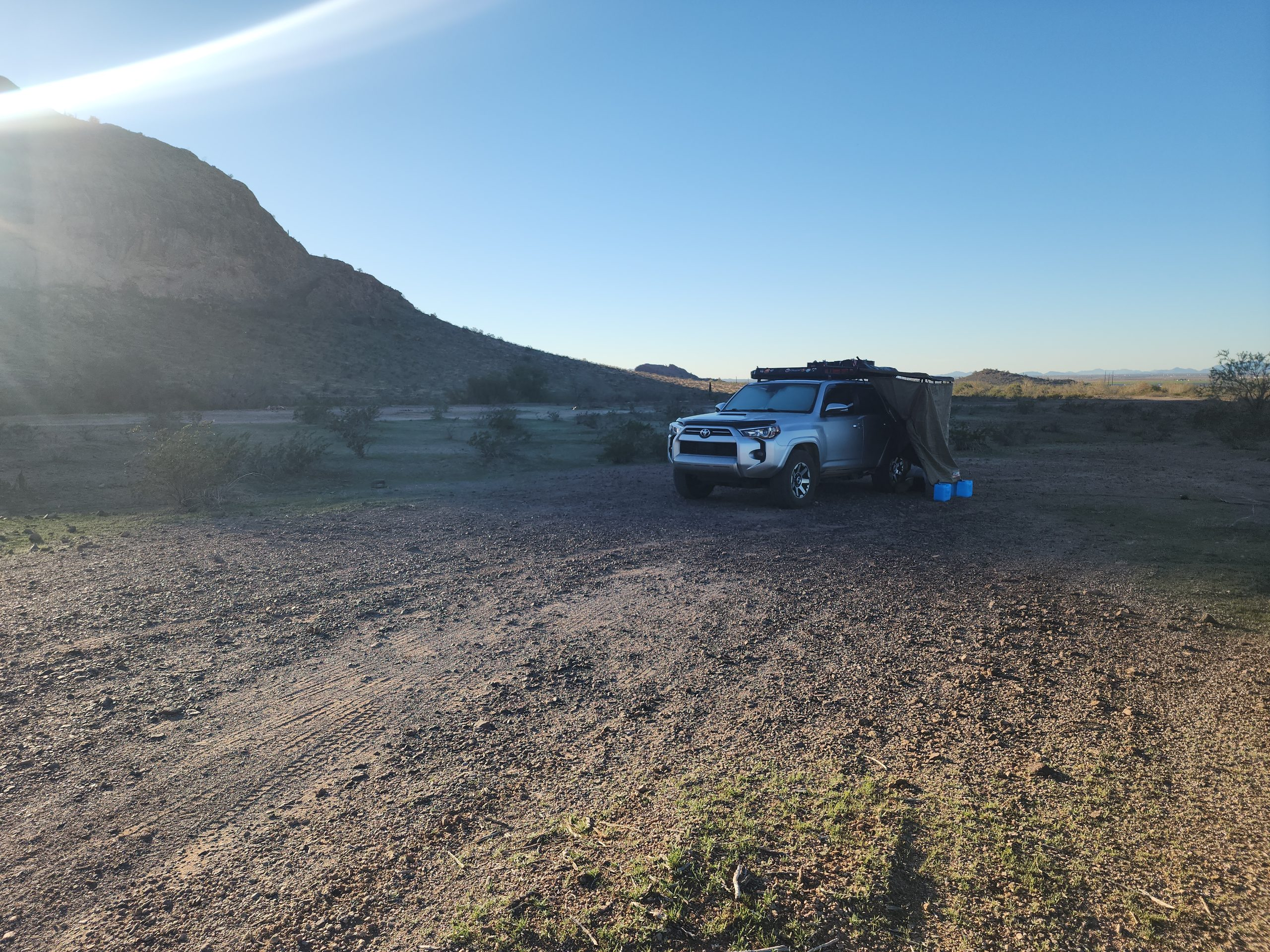
I use a lot of dark and neutral colors instead of filling the visible parts of the vehicle with bright gear that immediately catches the eye through a window. Color choice may sound like a small detail, but a bright piece of equipment can stand out from surprisingly far away.
I also use bug screens over some of my windows.
Their main job is keeping bugs out while allowing airflow, but the dark mesh adds another layer between someone outside and the interior. The screens do not create complete privacy, although they make the inside look less visually open from a distance.
I would rather give someone very little to look at once their attention lands on the 4Runner.
I Keep Valuable Gear Out of Sight
The 4Runner carries far more than camping equipment. My computer and work equipment travel with me, along with power systems, electronics, tools, food, dog supplies, and everything else I need for full-time car camping.
I do not want those items sitting where someone outside can quickly identify what I carry.
Organization helps me make a small vehicle work, but it also limits the amount of information visible through the windows. A person glancing inside does not need an inventory of my laptop, electronics, power equipment, or anything else worth taking.
The fewer obvious valuables I display, the less there is to investigate.
I Pay Attention to the Vehicles Around Me
The parking space itself only tells part of the story. A large van can pull in beside me ten minutes later and block my view. Another driver can park too close for comfort, or a quiet section of the lot can suddenly become much busier.
I keep reevaluating the space while I am there.
If the situation changes enough that I no longer like where I am parked, I move. Changing spaces takes very little effort compared with spending the next hour uncomfortable with what is happening around me.
The Driver’s Seat Stays Accessible
City parking also changes how I manage the inside of the 4Runner. I do not want to climb over storage bins, move equipment, put shoes on, find my keys, and rearrange camp before I can drive away.
When I stop somewhere that requires more awareness, I keep the driver’s area usable. I am not sitting behind the steering wheel expecting something to happen. I simply avoid creating obstacles between deciding to move and actually doing it.
That habit becomes especially important when the 4Runner serves as both my transportation and my living space.
Overnight City Camping Is Rare for Me
Most of my time in a city revolves around getting things done rather than finding somewhere to sleep. I probably spend the night in developed areas fewer than five times a year, even when I include rest stops in that number. It is not a regular part of how I car camp.
When I do stay overnight, I choose a place where overnight parking is legal. On private property, I double-check with an employee, owner, or manager so I know I have permission to remain there.
If I am talking with an employee, I will sometimes ask whether I can park next to their vehicle as well. Their car gives me another barrier along one side of the 4Runner and places me near an area that someone working there already uses.
It is a small detail, but it gives me another way to control the space immediately around my vehicle.
I do not rely on finding a random parking lot and hoping nobody asks me to leave.
Knowing I can legally remain there removes one unnecessary problem from the night. I can pay attention to the people and vehicles around me without also wondering whether security, an employee, or property management will knock on the window because I should not be there.
I Use the City Without Settling Into It
Cities play an important role in my car camping system. I use them for groceries, laundry, libraries, repairs, showers, supplies, veterinary care, and other services that become harder to find once I return to remote areas.
My habits change while I am there.
At a campsite, I may open the back of the 4Runner, pull equipment out, cook, work, and settle into the space around me. A city parking lot calls for a tighter footprint and more awareness of the movement around the vehicle.
I use what I need from the city without treating a parking lot like camp.
Reducing the Opportunity
No parking strategy can guarantee that someone will leave a vehicle alone. What I can do is reduce some of the easy opportunities.
Parking away from heavy foot traffic gives strangers fewer reasons to pass directly beside the 4Runner. A corner can limit casual movement around the vehicle, while a visually quiet interior gives curiosity less to work with.
I also keep paying attention after I park because conditions around the vehicle can change quickly.
City safety for me has never meant assuming everyone around me presents a threat. It means making deliberate choices about my surroundings instead of waiting until someone is already standing beside the window.
The best time to think about that possibility is before it happens.
Build a Safer Car Camping System
City parking is only one piece of staying prepared on the road. Inside the 4Runner Nomad Academy, I go deeper into the systems behind car camping, from choosing places to stay and evaluating a location to organizing the vehicle so it works when plans change
Fueled by coffee, road miles, and Roy’s questionable assistance. Enjoyed the read? Help keep it rolling. Buy Me a Coffee →