A campsite can look perfect in a photo and still be a terrible fit for the night I need to spend there. Scenery is only one part of how I evaluate a location.

When your vehicle is also your living space, the campsite has to support more than recreation. It may also need to support sleep, work, cooking, water management, weather protection and the ability to leave safely.
That changes what “good campsite” means.
Access matters before the view
The first thing I care about is whether I can comfortably get in and back out. A road can change quickly with rain, traffic or erosion. I pay attention to the surface, clearance, narrow areas, turnaround opportunities and whether conditions are likely to deteriorate while I am there.
Getting into a campsite is only half the decision. I need a backup exit too.
I look at exposure
Trees, washes, ridgelines, loose ground and open areas all behave differently when weather changes. A campsite that feels perfect during a calm afternoon may become unpleasant or unsafe during high wind or a heavy storm.
I look at where water might move, what could fall, where wind has a clear run and whether my vehicle would be boxed in. Weather often has more influence over where I park than the scenery does.
Distance to resources matters
Sometimes I want to be remote. Other times being 45 minutes from water, groceries and fuel creates unnecessary work. That decision depends partly on how long I plan to stay and what supplies I already have.
While I have Starlink to connect online. Other campers may have a beautiful location with no workable connection. Which may be perfect for a weekend and completely wrong for a workday.
The campsite has to fit the purpose.
I consider how much camp I actually need
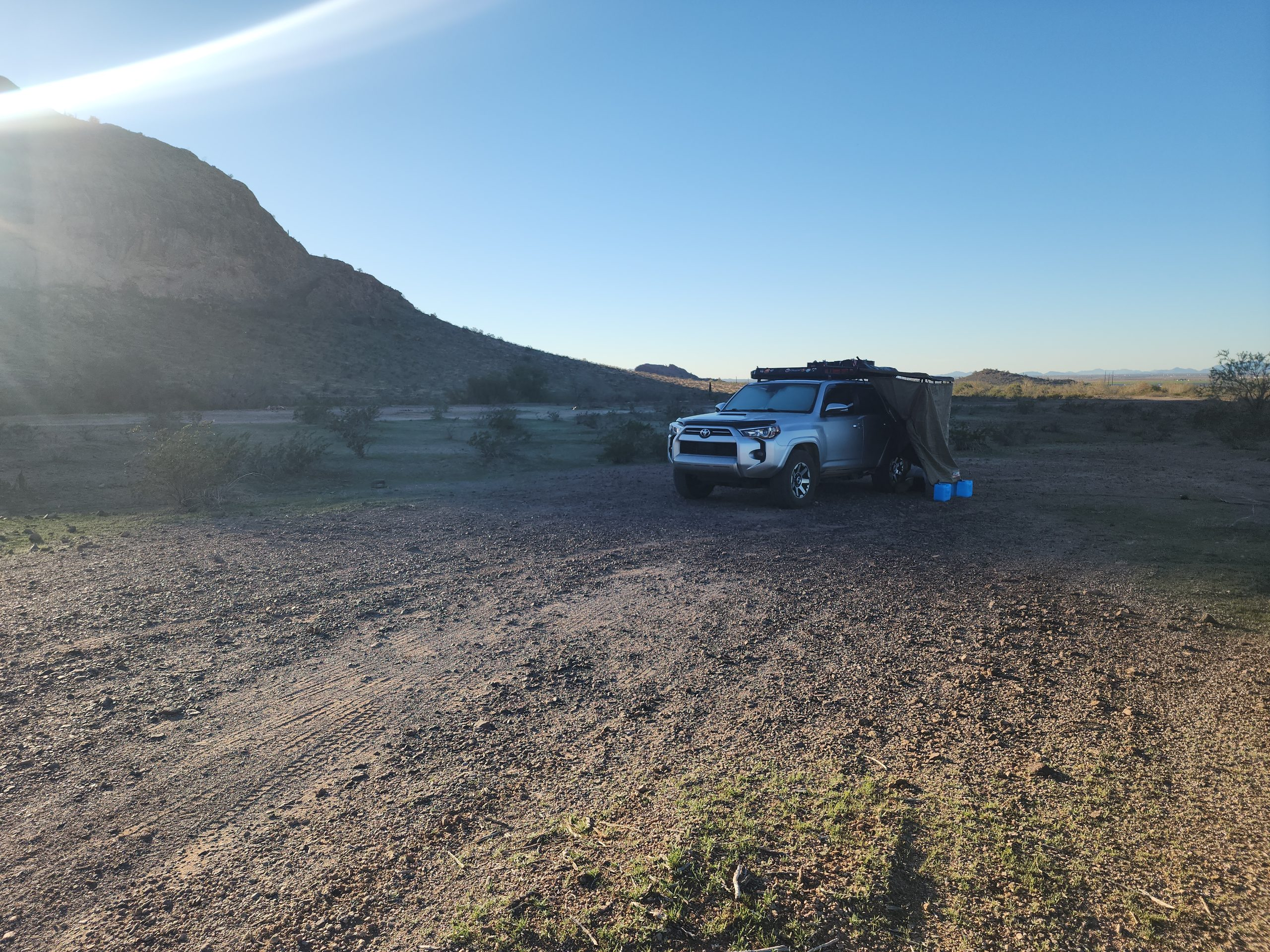
Not every stop needs chairs, tables and equipment spread around the vehicle. Most times I only need enough room to park level, cook dinner and sleep.
Other times I am staying longer and need space to operate outside the 4Runner. I would rather choose a campsite that supports how I will actually use it than one with the most dramatic view.
The best campsite solves the current problem
This is one reason my definition of a good campsite changes. One week I may need isolation. Another week I may need proximity to town. During hot weather I may care more about shade and elevation. During stormy weather I may prioritize access and shelter options.
Car camping becomes easier when a campsite is treated as part of the operating system rather than the final destination. A map pin tells me where a campsite is.
The rest of the information tells me whether I should stay there.
Plan a Camp Layout That Works
Once you choose a campsite, the next step is deciding how to use the space safely and efficiently. The Camp Layout Checklist inside the 4Runner Nomad Academy walks through the practical details to consider when positioning your vehicle, cooking area, gear and other parts of camp.
Use it to build a layout around your setup, the conditions and the way you plan to use the campsite.
Fueled by coffee, road miles, and Roy’s questionable assistance. Enjoyed the read? Help keep it rolling. Buy Me a Coffee →