The right length of stay depends on what you need from the campsite. One night may give you enough time to rest before continuing along a route. Another location may support your water, power, work and daily routines well enough for a week-long stay.

Legal limits are important, but they only establish the maximum. They do not tell you whether staying that long makes sense. After years of car camping, I have learned to ask a different question: How long will this campsite continue to support what I need?
Check the Legal Limit
Start with the rules for that specific campground or public-land area. Do not assume every campsite follows a 14-day limit. Rules can change by land agency, campground, season and location.
Big Bend National Park allows up to 14 consecutive nights but also sets annual limits. Blue Ridge Parkway campgrounds allow as many as 30 consecutive days, while some Isle Royale campgrounds limit summer stays to only one, two or three nights. (Big Bend National Park, Blue Ridge Parkway, Isle Royale National Park)
Dispersed camping rules may cover an entire district rather than one marked campsite. Moving to a nearby pullout may not restart the clock either.
Check the managing agency’s website, posted campground rules or reservation details before settling in.
Know Which Camping Mode You Are Using
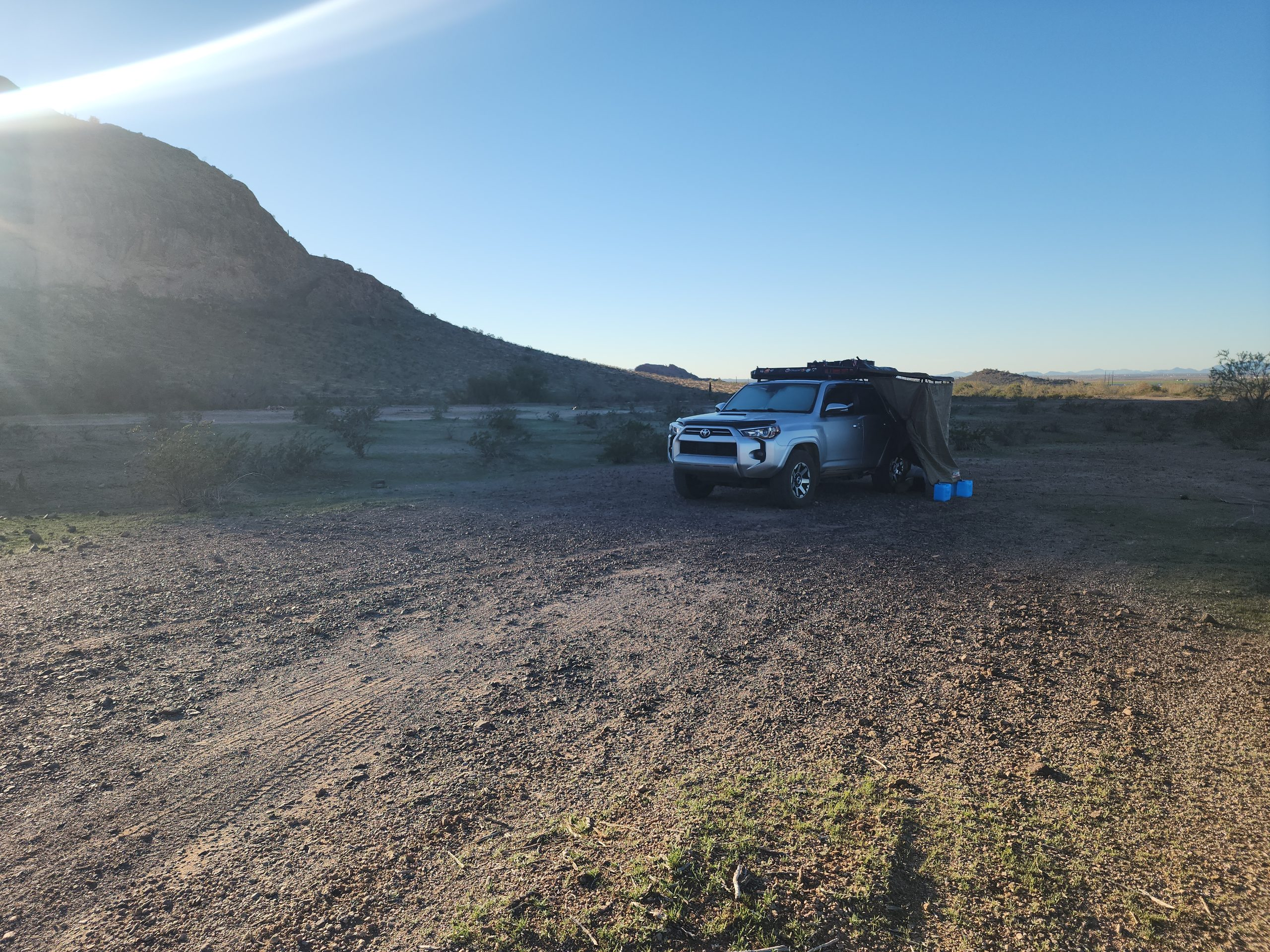
I operate from my 4Runner in two basic modes: travel mode and stationary mode. Travel mode supports movement. Most of my gear stays packed, and I organize camp around an easy departure. Stationary mode supports a longer stay.
I may create a more complete kitchen area, position my power equipment and establish a daily routine. Remaining in one place also gives me time to work, inspect gear and take care of small problems before they grow.
A campsite that works for travel mode may not support stationary mode. The site needs enough room, access and resources for the way you plan to use it.
Let Your Resources Set the Practical Limit
Water, food, fuel and power often determine how long a campsite continues to work. A remote location may look free until every supply run requires a long drive over a rough road. Leaving camp for one forgotten item can also cost time, fuel and possibly the campsite itself.
Before extending a stay, I consider how much I have left and how difficult it will be to replace it.
Developed campgrounds sometimes support longer stays because they solve several needs at once. Water, trash service, showers or electricity can reduce the number of trips into town.
Free camping does not always create the lowest overall cost.
Watch the Weather and the Exit
Weather can shorten an otherwise legal stay. Rain may turn a manageable dirt road into mud. Wind can change the safety of a site beneath trees, while extreme heat increases water and power use.
Wildfire season changes my setup even when no active fire threatens the immediate area. I want a direct route out and a camp that I can pack quickly.
Look beyond today’s weather before settling in.
A campsite may work under current conditions without supporting the forecast that arrives three days later. Leaving early usually creates fewer problems than trying to move after the road or weather deteriorates.
Decide Whether the Campsite Supports Your Work
A good place to sleep does not always provide a good place to work. When I need internet access, I consider cellular service, Starlink visibility and the power required to stay connected. Heavy tree cover may provide shade while interfering with satellite access and solar charging.
Deadlines also influence the decision. Reliable connectivity may make a longer stay worthwhile. Poor service or limited charging can turn that same location into a short stop.
Not every campsite needs to function as an office. You simply need to know what job the campsite needs to perform.
Leave Before the Campsite Stops Working
You do not need to stay until the final legal day. Move when supplies run low, weather threatens access or the location no longer supports your responsibilities. Noise, dust, insects and crowding may also become more difficult after several days.
Leaving early does not mean the campsite failed.
Perhaps it gave you a safe night, several productive workdays or a base for exploring the area. Once that purpose ends, the next campsite can support the next part of the trip.
The legal limit tells you how long you may stay. Your resources, weather, work and operating mode tell you how long you should stay.
Decide Whether to Stay, Resupply or Move
Knowing which factors matter does not always make the final decision obvious.
I created a printable Campsite Stay Planner for the 4Runner Nomad Academy. It provides a structured way to review your campsite and choose whether to remain, complete a supply run or move to the next location.
Join the academy to download the planner for your notes, camp binder or road paperwork.
Fueled by coffee, road miles, and Roy’s questionable assistance. Enjoyed the read? Help keep it rolling. Buy Me a Coffee →