Print on demand has been part of my online work for more than 20 years. I started with CafePress, back when the choices were limited and the finished products were not nearly as customizable as they are now. A lot has changed since then, but the basic model is still the same.

You create a design and place it on a product. When someone orders it, another company handles the printing and shipping. You do not have to buy a large amount of inventory upfront, store boxes of merchandise, or package every order yourself.
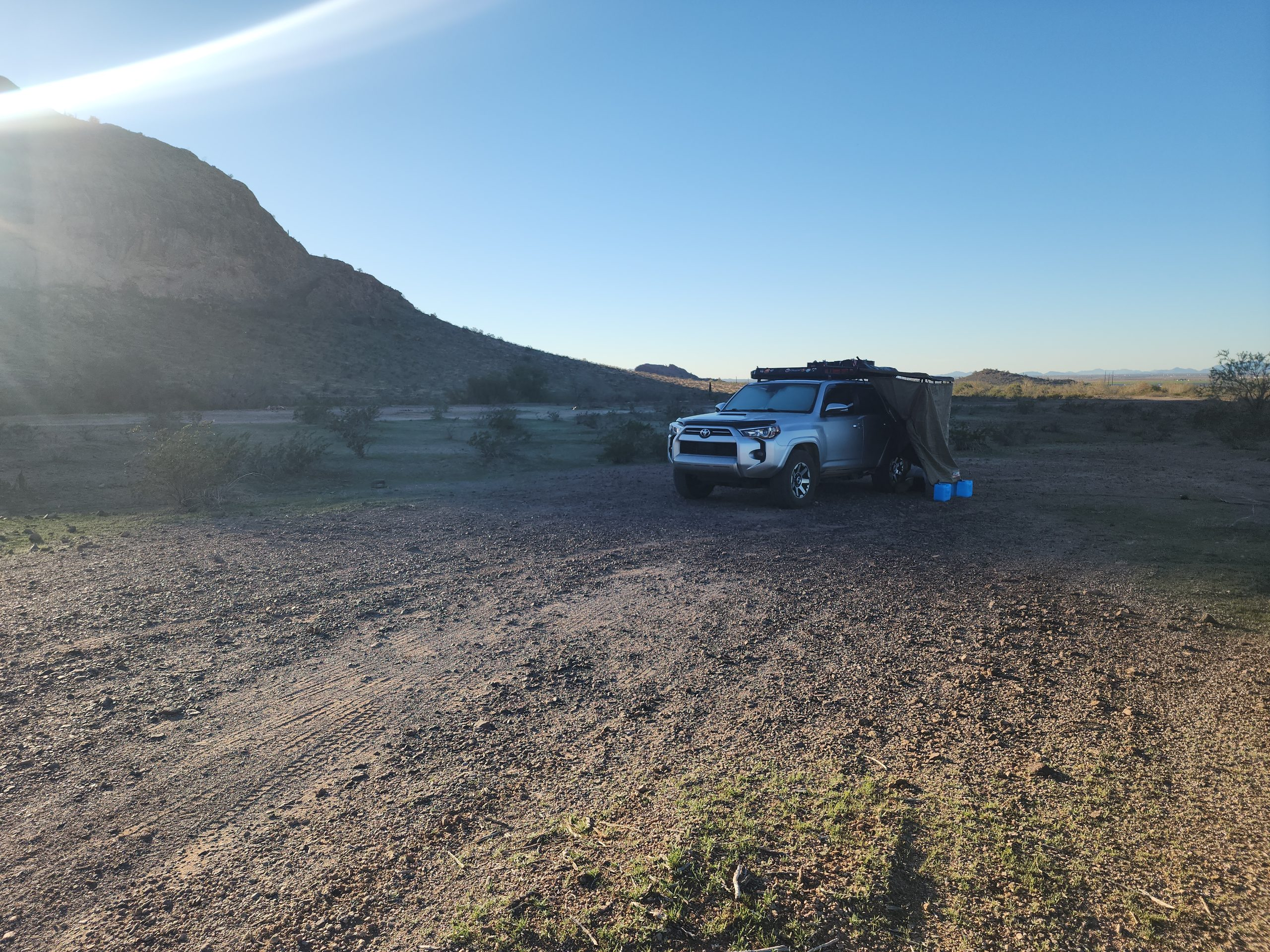
That is what originally made print on demand useful to me. Now that I travel full-time in a Toyota 4Runner, it makes even more sense.
Selling physical products from a small space

There is no practical way for me to carry boxes of shirts, stickers, mugs, mailers, labels, and packing supplies in the 4Runner. Even if I found the room, I would still need a reliable place to receive inventory and ship orders.
Print on demand removes most of that physical work.
For 4Runner Nomad, I am currently using Printify. When someone places an order, the product can be printed and shipped without requiring me to stop traveling, find a post office, or turn part of my vehicle into a stockroom.
That flexibility is valuable, but it does not mean every product is worth creating.
Start with something people already recognize

Print-on-demand platforms make it easy to add a design to hundreds of products. It can be tempting to fill a shop with shirts, mugs, bags, hats, notebooks, stickers, and anything else that will hold an image.
I have learned that more products do not automatically lead to more sales.
I would rather offer a smaller collection built around something people already connect with. My current 4Runner Nomad designs come from Roy, Riven, familiar jokes, recurring characters, and moments that received a strong response from the audience.
Those reactions give me useful information. If people repeatedly laugh at a Roy post or recognize Riven’s expression immediately, that idea has already made a connection before it becomes merchandise.
That is a much stronger starting point than creating a random design simply because there is an empty space in the shop.
A mockup is not the finished product
One of the easiest mistakes to make with print on demand is trusting the computer mockup too much. A design can look great on a screen and print very differently. Colors can shift. Small details may disappear. Text may be difficult to read. The size and placement of the artwork can also feel different once you see the actual shirt or sticker.
That is why I order samples before putting much effort into promoting a new product.
I want to see the print quality, check the colors, feel the material, and look at the finished product the way a customer will. A polished mockup may help make a sale, but it does not tell me whether the customer will be happy when the package arrives.
The selling price is not your profit
The financial side of print on demand can be easy to misunderstand. If you sell a shirt for $30, you are not earning $30. The base product and printing have to be paid for first. You may also have shipping costs, payment-processing fees, marketplace fees, website expenses, or advertising costs.
Your actual profit is whatever remains after those expenses.
This is the main tradeoff with print on demand. You usually give up part of the profit margin in exchange for not purchasing inventory, storing products, packing orders, and handling fulfillment yourself.
For my current situation, that tradeoff can be worth it.
If a design does not sell, I am not left with several boxes of unsold merchandise. If one does sell, I do not have to interrupt a travel day to package and ship it. I can test a product with less financial risk than I would take by ordering a large quantity in advance.
Print on demand still requires a business behind it
Print on demand is often presented as an easy or passive source of income. The fulfillment may be handled for you, but the rest of the work does not disappear.
Someone still has to develop the idea, create or commission the design, choose the right products, order samples, set prices, build the shop, write product descriptions, market the merchandise, and help customers when something goes wrong.
The print-on-demand company handles production and shipping. It does not create demand for the product.
After more than 20 years, that remains the most important part of the model: you still need something people want to buy.
Print on demand simply gives you a way to sell it without becoming your own warehouse and shipping department.
For someone traveling full-time, working from a small space, or testing physical products without investing heavily in inventory, that can make it an income option worth considering.
Want to explore other income options?
Print on demand is only one way to build income around your experience, skills, or existing audience. Inside the 4Runner Nomad Academy, I share downloadable resources designed to help you identify what you already know, explore different income options, and think beyond relying on one job, platform, or client.
Fueled by coffee, road miles, and Roy’s questionable assistance. Enjoyed the read? Help keep it rolling. Buy Me a Coffee →