Planning my food for workamping at Wild Ridge required more than making a grocery list. Every trip into town came with an approximately 24-hour turnaround to handle appointments, pick up groceries and work supplies, take care of vehicle needs, and complete any other errands that had accumulated.
By the following day, I needed to return to the ridge. Forgetting something important could mean going without it until I had another opportunity to leave.
A Grocery Trip Required a Complete Plan

I used curbside pickup for all my groceries and supplies. Before leaving Wild Ridge, I placed each order and planned the pickup times around my appointments and remaining errands.
Curbside service saved hours that I otherwise would have spent walking through several stores. It also made careful planning necessary. Once I submitted the orders and started the trip, adding forgotten items became more complicated.
Food made up only one portion of the supply run. I also needed to consider drinking water, medication, toiletries, vehicle fluids, property supplies, upcoming projects, and anything else that might run out before my next opportunity to leave.
A normal shopping list would not cover it. I had to think several weeks ahead.
The Refrigerator Did Not Belong Only to Me
Wild Ridge had a refrigerator, but working crews also used it whenever they stayed on the property. I intentionally kept part of the refrigerator open so they had room for their own food.

That shared arrangement affected every grocery order. An empty shelf on shopping day did not automatically count as space I could fill for the next month.
I planned around the amount of refrigerator space I could reliably use. Fresh food still played an important role, but the rest of my supply needed to support me without taking over the shared storage.
Having access to a refrigerator and having a refrigerator dedicated to you are two different things. Remote jobs, seasonal positions, shared housing, and workamping arrangements can make that distinction important.
My Car Camping Food System Still Worked
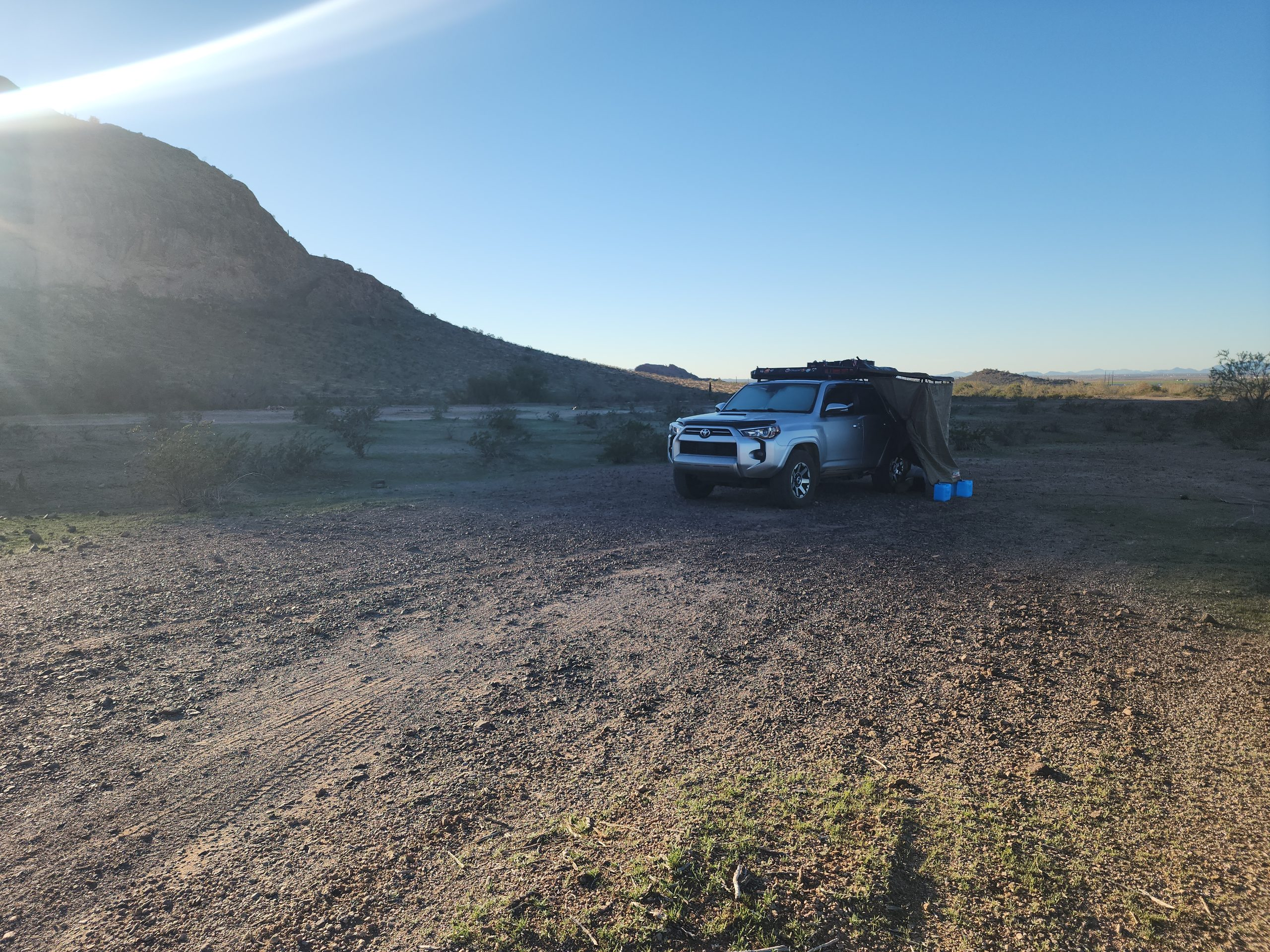
I already had a food system built around life in a Toyota 4Runner. Accepting a workamping position did not require me to abandon it and start again.

The same structure continued to work at Wild Ridge. I adjusted the amount of food in each part of the system until it could support approximately one month rather than a shorter car camping stay.
That approach gave me fresh food for regular meals, ingredients that did not compete for refrigerator space, quick options after physically demanding workdays, and a buffer if my next supply run changed.
I did not need to assign 30 meals to specific dates. Instead, I needed food that worked together and gave me enough flexibility to adjust when the work, weather, or number of people on the property changed.
The Extra Food Protected My Time
Wild Ridge sat in rugged country, and the schedule did not always follow the calendar. Wind, storms, monsoon damage, road conditions, and unexpected property problems could change what needed my attention.
Keeping approximately one month of food on hand allowed me to delay a supply run when leaving no longer made sense. I could make that decision based on the property and road conditions rather than an empty food shelf.
The system also reduced unnecessary trips. Fuel and time mattered, but so did the interruption. Every return to town pulled me away from fire mitigation, water checks, vegetation management, structural concerns, and the other responsibilities waiting on the ridge.
Food planning became part of how I managed the job.

Food Access Belongs in the Workamping Decision
A workamping listing may describe the duties, schedule, campsite, hookups, or compensation. It may not explain how far you will travel for groceries, whether you will share food storage, how long you can leave the property, or what happens when weather delays your next trip.
Those details affect whether a position remains manageable.
Before accepting a remote job, consider how you will collect supplies, how much storage you can control, and how long your food needs to support you. The work itself is only one part of living at the job site.
See How I Adapted the System
Inside the 4Runner Nomad Academy, I share how my existing car camping food system continued to work at Wild Ridge and what I changed to cover approximately one month. Academy members can also download my Car Camping Food System from the Files section.
Fueled by coffee, road miles, and Roy’s questionable assistance. Enjoyed the read? Help keep it rolling. Buy Me a Coffee →