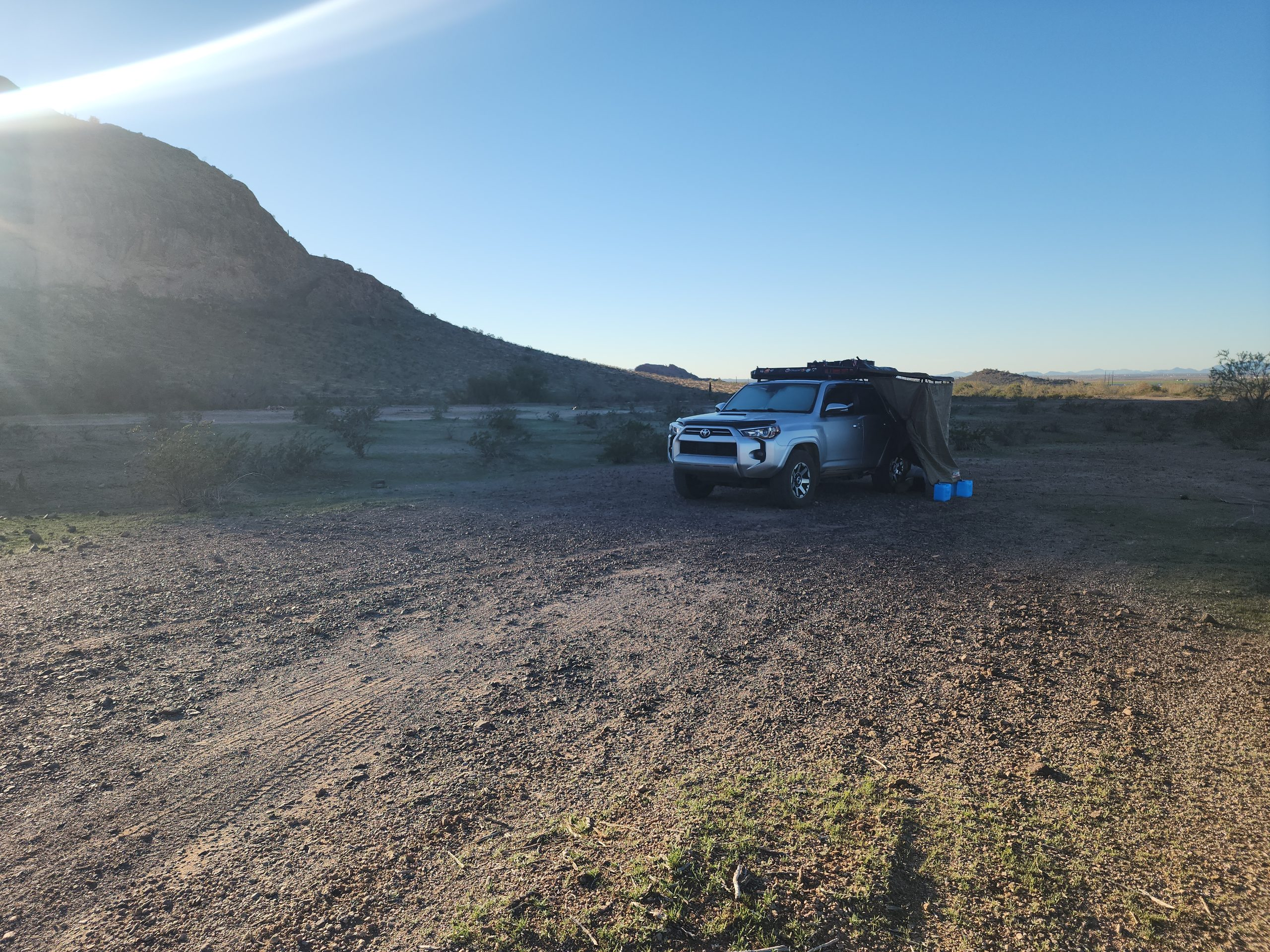
A surprising number of people think my Toyota 4Runner is bigger on the inside than it actually is. I can understand why. When I set up camp, there might be a kitchen at the swing hitch, solar panels outside, a place for Rex to relax, and enough equipment to make living on the road reasonably comfortable. From the outside, it can look like I have a lot of room to work with.

But once everything is packed away, my entire living arrangement fits inside a Toyota 4Runner.
I have been car camping for nearly a decade, with more than three years of that spent living full-time from my 4Runner. Over time, I have learned how to make a small space handle the responsibilities of a much larger home.
That doesn’t mean the vehicle magically gets bigger. It means I have had to become more deliberate about how I use it.
Estimating My 4Runner’s Usable Living Space

The rear of my 4Runner is not one consistent width. It has three general sections, each shaped differently.
The kitchen area near the rear hatch is the narrowest at approximately 3.5 feet wide. The middle section, where the wheel wells affect the layout and Rex sleeps, is approximately 4.5 feet wide. The widest section is where the back seats were originally located. That area measures up to approximately 62 inches across, but the door handles, interior panels, and other contours reduce how much of that width functions as usable living space.
| Section | Approximate width | Primary use |
|---|---|---|
| Rear cargo area | 3.5 feet | Kitchen and storage |
| Middle section | 4.5 feet | Rex’s sleeping area |
| Former back seat area | Up to 62 inches | My sleeping area |
These measurements cannot simply be multiplied by the full interior length because none of those widths continues through the entire vehicle. The floor changes shape from one section to the next, and some of the apparent space is not practical for sleeping, sitting, or storing equipment.
For that reason, I describe my rear living area as less than 27 square feet of usable space. It is a working estimate rather than a precise architectural measurement, but it better reflects the space I can actually live in than the vehicle’s advertised cubic cargo capacity.
My 4Runner Has to Function as More Than a Bedroom

I am not traveling with a sleeping bag and a cooler for an occasional weekend trip. The 4Runner carries the equipment I use for everyday living, along with the supplies that allow me to spend extended periods away from developed campgrounds.
That includes my sleeping arrangement, food, kitchen equipment, water, power stations, solar equipment, clothing, tools, emergency supplies, and the various things I need to maintain the vehicle and continue working while traveling.
Rex also needs a place in the arrangement.
There are no separate rooms for these things, and I don’t have the luxury of leaving equipment spread across the floor. Everything has to fit together in a way that allows me to access what I need without unpacking half the vehicle every time I want to make coffee.
That has probably been one of the most important lessons from living in a small space: the amount of equipment you can fit inside a vehicle is not necessarily the amount you can comfortably live with.
Why I Don’t Have a Traditional Drawer System

One of the more noticeable differences between my 4Runner and many overlanding builds is the absence of a permanent drawer system. I use a modular arrangement that allows me to move equipment around depending on what I am doing.
Two toolboxes serve as my chuck boxes, organizing my food and kitchen equipment. My refrigerator provides cold storage, while additional containers hold supplies that don’t require refrigeration.
This arrangement allows me to access equipment from the rear of the vehicle and move individual components when necessary.
A permanent drawer system might look more polished, but I would be committing a portion of my limited interior to a structure that stays in place whether I need it or not.
For my particular lifestyle, flexibility has been more valuable. There are times when I want a compact arrangement for traveling and other times when I can spread out at a campsite.
My setup needs to accommodate both.
The Swing Hitch Becomes My Kitchen

The rear of the 4Runner is one of the most frequently used areas of my setup. Opening the hatch gives me access to my kitchen equipment, food storage, and refrigerator without needing a permanent indoor cooking area.
It also allows me to take advantage of the space outside the vehicle when conditions permit. This is an important distinction when people imagine living inside a small SUV.
I don’t conduct every part of my day inside those 27 square feet.
At a campsite, the space around the vehicle becomes part of my daily living arrangement. I can cook outside, sit outside, work outside, and give Rex room to enjoy his surroundings.
The vehicle remains the central storage and sleeping space, but the campsite provides additional room to function.
Of course, weather changes that arrangement.
Rain, strong wind, extreme temperatures, and other conditions can limit how much time I comfortably spend outside. That’s when an organized interior becomes particularly important.
One Setup Has to Work in Different Situations

My 4Runner does not remain arranged exactly the same way every day. The amount of equipment I use and where I use it depends on whether I am moving between destinations or staying at one campsite for a while.
That is another reason I prefer a modular setup. I can keep everything compact and accessible during travel, then use more of the space around the vehicle when I remain in one place. The system changes without requiring me to rebuild the interior or install permanent storage that limits my options.
I explain this process more fully in my article about travel mode and stationary mode, including how each one changes the way I organize and use my car camping setup. You can read more about that by clicking here.
Living With a Dog Makes Space Management More Important

Adding a dog to a small vehicle changes the way I have to think about the available space. Rex has his own needs, including room to rest, access to water, food storage, and the ability to travel comfortably.
His supplies also take up space that might otherwise be available for my equipment.
With a larger camping rig, it might be possible to dedicate an entire section to a dog’s belongings. Inside the 4Runner, I have to consider how his equipment fits alongside everything else.
I also have to account for the fact that my vehicle is both transportation and living space. An arrangement that works beautifully while parked might not be appropriate when traveling with a dog.
This is one of the reasons I believe planning a car camping setup requires more thought than simply determining whether everything will physically fit.
Small Living Spaces Require Different Decisions
There are certainly things I would enjoy having more room for. I wouldn’t complain about additional counter space, a larger refrigerator, or somewhere to leave projects spread out without interfering with everyday activities.
But I also know what a larger vehicle would change about the way I travel.
The 4Runner allows me to navigate towns, explore backroads, access smaller campsites, and use ordinary parking spaces without managing a much larger rig. It has also encouraged me to build systems that make better use of what I already have.
My refrigerator is relatively small, so the rest of my food storage has to be planned around the space available. I also use separate power stations and portable solar equipment rather than a large permanent electrical installation, while my water system includes 14 gallons dedicated to drinking and cooking, with other options available when I stay in one place longer.
None of these systems exists in isolation. They have to coexist within the same limited space.
That is what makes a car camping layout work over the long term. It’s not simply about how much you can carry. It’s about whether you can continue living comfortably and maintaining your routines with everything you carry.
A Small Vehicle Can Support a Much Larger Life

There is a difference between having a small living space and living a small life. My 4Runner has taken me across the country, into national forests, through small towns, and to places I probably would never have visited if I had stayed in one location.
I have met people, explored communities, maintained my business, and developed routines that allow me to continue traveling without treating every day like a vacation.
The vehicle is small, but the experiences it makes possible have been anything but.
When I share my setup, I’m not suggesting that everyone should live in a Toyota 4Runner or that less than 27 square feet would work for every person. I am showing what I have managed to do with the space available to me.
And for anyone trying to determine whether a smaller vehicle could accommodate their own camping plans, I would encourage them to look beyond the manufacturer’s cargo capacity.
Measure the actual space. Consider what needs to fit inside it. Think about how the arrangement will function when you’re tired, when it’s raining, when you need to work, and when you simply want to get something out of storage without moving six other things.
Those everyday details will tell you considerably more about a car camping setup than the advertised cubic footage ever could.
Build a Car Camping Setup That Works
The 4Runner Nomad Academy provides practical systems, planning resources, and field-tested guidance to help you organize your space, avoid costly setup mistakes, and build a car camping arrangement that works beyond the first weekend.
Fueled by coffee, road miles, and Roy’s questionable assistance. Enjoyed the read? Help keep it rolling. Buy Me a Coffee →