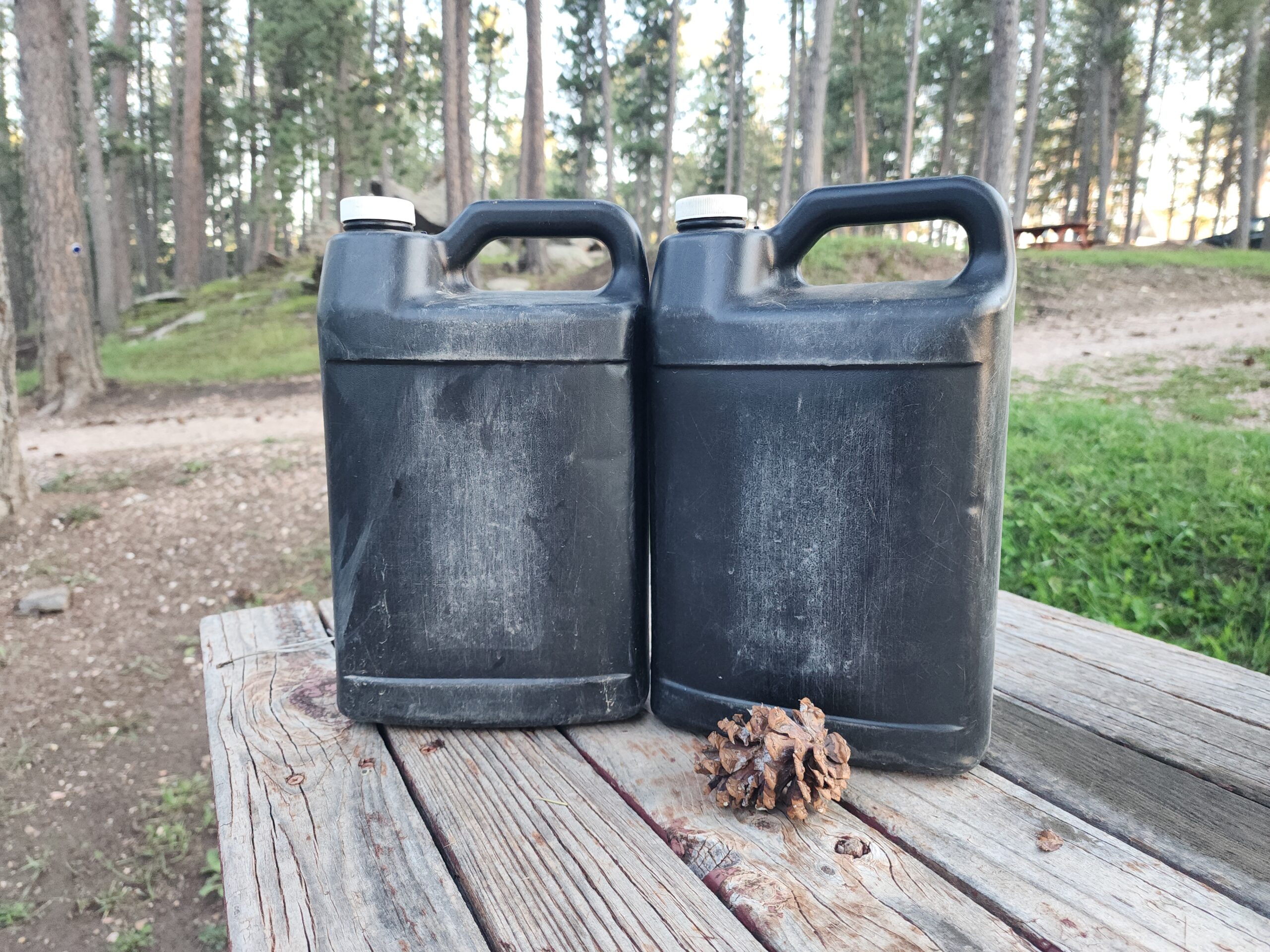
Water is one of the few supplies I do not like estimating casually. I currently carry a baseline supply dedicated specifically to drinking and cooking, but the number that works for my setup will not automatically work for someone else.
Water needs change too much.
The better question is not, “How many gallons should a car camper carry?”
It is, “What does your water need to do before you can refill it?”
Start with drinking and cooking
I treat drinking and cooking water differently from water that might be used for cleaning equipment or other non-potable tasks.
That gives me a protected baseline. How much you need depends partly on weather, elevation, physical activity and how much cooking you do at camp.
Someone eating mostly ready-to-eat food will use water differently from someone boiling pasta, making coffee and washing cookware several times a day.
Pets change the calculation
A dog adds another daily water requirement. Hot weather, hiking and activity can increase that quickly. That means water planning for one adult traveling alone is not the same as planning for an adult with a dog.
The animal’s needs have to be included before deciding how long a water supply can reasonably last.
Distance to resupply matters
Four gallons can feel like plenty when you are ten minutes from town. It feels very different when the closest reliable water source requires a long drive.
I look at how long I expect to stay, where the next known refill is located and whether that source is actually accessible for the containers I carry.
A spigot is not particularly useful if your equipment cannot connect to it. That is why adapters and proper drinking water equipment can matter almost as much as capacity.
More water also means more weight
Water is heavy. Adding capacity without thinking about where that weight is stored can create another problem. This is especially relevant in car camping where every gallon competes with food, recovery gear, clothing, tools and everything else being carried in the vehicle.
The goal is enough capacity to maintain a comfortable margin without hauling water simply because there was space for another jug.
Build around the longest realistic stretch
I would rather calculate around the longest normal period between reliable resupply than around an ideal camping day. Then I want reserve capacity.
That reserve is what gives me room when weather changes, a water source is unavailable or I decide to stay somewhere longer.
Water planning is less about choosing the perfect container. It is about knowing how quickly your household uses water and how easily you can replace it. Once those two numbers are understood, the amount you need becomes much easier to figure out.