For years, I kept looking for one perfect car camping setup. I wanted a layout that worked equally well during long travel days, quick overnight stops, and extended stays at camp. Eventually, I realized the problem was not my equipment. I expected one arrangement to handle two very different ways of living.

My Toyota 4Runner serves as transportation, storage, kitchen, office, and bedroom. With less than 27 square feet of usable living space, I cannot leave everything spread out and still expect the vehicle to function. Instead, I use two operating modes: travel mode and stationary mode.
The equipment does not completely change between them. I change how I use it, what I keep accessible, and how much of my setup expands beyond the vehicle.
Travel Mode Keeps Me Ready to Move

Travel mode supports movement. When I am covering miles or changing locations frequently, I want as little friction as possible between waking up and getting back on the road.
I keep my gear contained, secure loose equipment, and limit what I take outside. Anything that comes out eventually needs to go back inside, so every additional camp item creates another task before departure.
That does not matter much during a weeklong stay. It matters a great deal when I only plan to sleep, make coffee, and continue driving.
A travel setup also needs to work when I arrive somewhere tired. If I must move several containers before I can sleep or unpack half the 4Runner to reach dinner, the layout creates more work at the exact moment I need it to function.
Travel mode does not mean going without the equipment I need. It means placing that equipment around the next move.
Access Matters More Than Appearance

The back of a vehicle may look like one large cargo area, but it contains several sections with different widths, obstacles, and access points.
In my 4Runner, the rear kitchen area forms the narrowest section. The middle widens around the wheel wells and provides space for Rex. The former back-seat area offers the most width and holds my sleeping area, although door handles and interior contours reduce the space I can actually use.
I explain those sections more fully in A Bigger Life Built Inside Less Than 27 Square Feet.
Travel mode requires all three areas to work together. I need to reach food and daily supplies without disturbing my sleeping area. Rex needs his own usable space, and nothing can block the driver’s seat or prevent me from leaving.
A setup can look clean in a photograph and still work poorly in daily life. The real test comes when you need something from the bottom of a container, prepare for sleep in bad weather, or pack before an early departure.
Stationary Mode Supports Daily Life

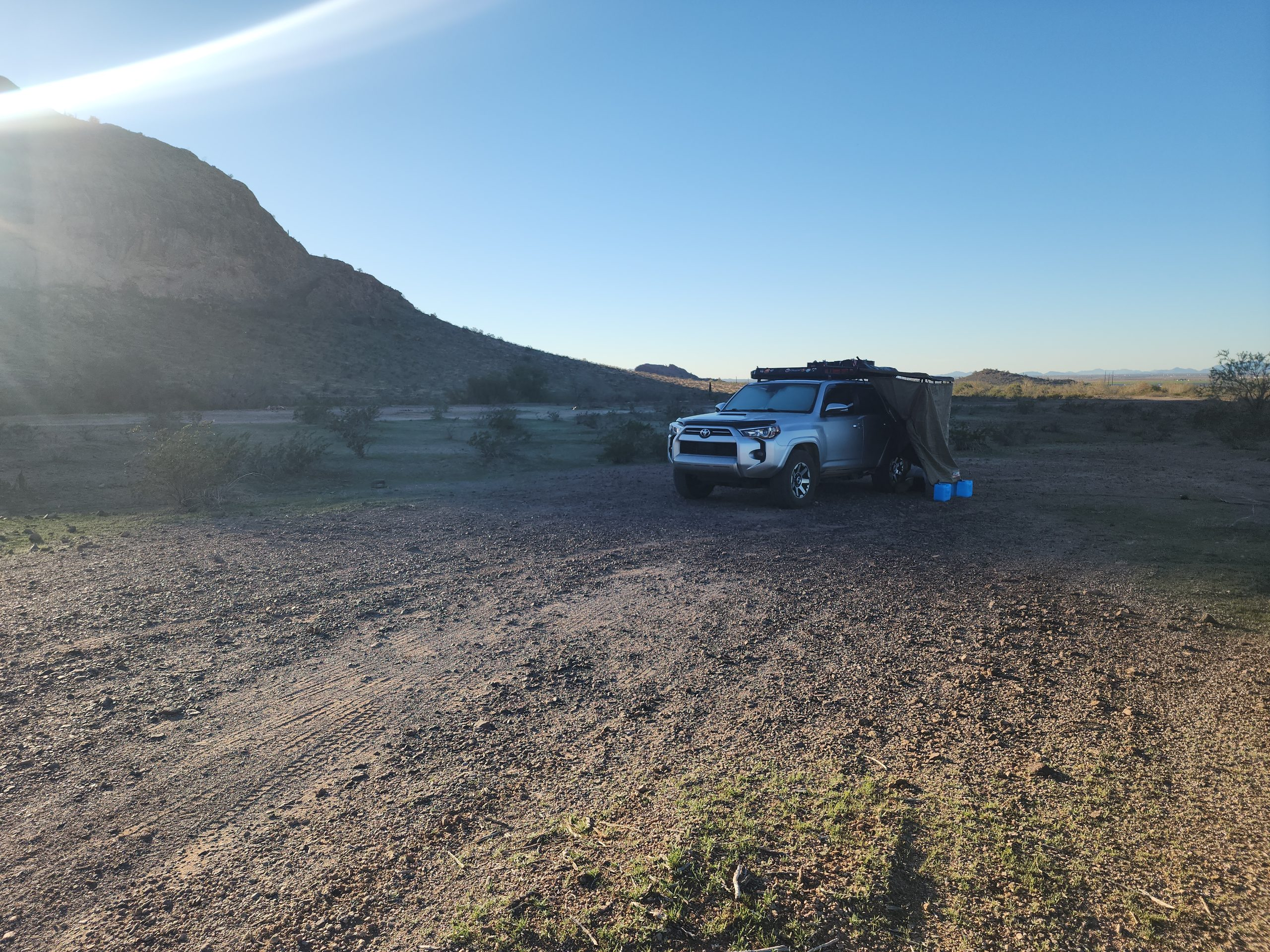
My priorities change when I stay in one place for several days or longer. Instead of organizing everything around tomorrow’s drive, I begin using the campsite as an extension of the 4Runner.
I may bring out equipment that makes cooking, working, or relaxing more comfortable. Portable solar panels can remain in position longer, and I have time to complete tasks that make little sense during a quick overnight stop.
Longer stays also give me room to inspect and reset my systems. I can reorganize supplies, clean equipment, check straps, catch small maintenance issues, and notice what needs restocking before it becomes a problem.
Business work fits more naturally into stationary mode as well. I can spend longer periods writing, editing photographs, updating the website, and planning content without building those tasks around another drive.
The setup expands, but the 4Runner still remains the center of it.
Stationary Does Not Mean Settled Permanently

A longer stay can slowly create camp sprawl. One item comes out for cooking, another makes working easier, and a third adds comfort around camp. Before long, moving requires far more work than arriving did.
I try to prevent that by keeping the 4Runner reasonably departure-ready. I do not need every outside item packed at all times, but I want a clear path back to travel mode.
Weather can change. A campsite can become uncomfortable, a family responsibility can affect my route, or another situation may require me to leave sooner than expected. Three days of camp infrastructure should not stand between me and the road.
This is one reason I prefer modular equipment over a completely permanent build. I can adjust the setup to the length of my stay without forcing one arrangement to handle every situation.
Each Mode Solves a Different Problem
Travel mode reduces the work required to move. Stationary mode reduces the work required to live in one place.
Those goals sound similar, but they create different priorities.
During travel mode, I focus on secure storage, quick access, simple meals, and an easy transition from driving to sleeping. Stationary mode gives more attention to comfort, maintenance, longer work sessions, and the tasks I postpone while moving.
Neither mode represents the better version of my setup. Each one supports the day I am actually having.
Problems usually begin when I use the wrong mode for the situation. Expanding camp during a one-night stop creates unnecessary packing. Remaining compressed during a long stay makes ordinary routines harder than they need to be.
Recognizing the difference allows me to decide how much of the setup should come into use before I start unloading.
A Flexibility Protects Limited Space
Permanent builds can work well, but permanent does not automatically mean efficient. Every fixed structure claims space whether I need it that day or not.
Inside a small vehicle, that tradeoff matters. A drawer system, platform, or storage unit may solve one problem while limiting access, adding weight, or reducing the layout’s ability to change.
My setup needs to support driving, sleeping, working, cooking, storage, and life with Rex. I cannot give every activity its own permanent area, so several parts of the 4Runner perform more than one job.
Flexibility allows the same limited space to support both movement and longer stays. I do not need to rebuild the vehicle whenever my plans change. I only need a clear method for shifting from one operating mode to the other.
Build Around the Way You Actually Camp
Before changing your layout, pay attention to how often you move and what creates the most work.
Frequent travelers may benefit from keeping more equipment contained and accessible from the doors they use most. Longer stays may justify a setup that expands outside the vehicle and supports more involved daily routines. People who regularly alternate between both need a clear transition between them.
The goal does not involve making your camper look the same every day. It involves building a setup that responds to the way you use it.
My 4Runner cannot become larger when I stay somewhere longer, but stationary mode lets me use the surrounding campsite more fully. When it is time to travel again, everything returns to a compact arrangement built around movement.
One vehicle supports both versions of my life because I stopped asking one fixed layout to do everything at once.
Build a Setup That Makes Life on the Road Easier
The 4Runner Nomad Academy provides practical systems, planning resources, and field tested guidance to help you organize your space, avoid costly setup mistakes, and build a car camping arrangement that works beyond the first weekend.
Fueled by coffee, road miles, and Roy’s questionable assistance. Enjoyed the read? Help keep it rolling. Buy Me a Coffee →